
Discover Singapore’s best wet markets, from Tekka Market to Chinatown Complex. Learn what to expect, what to eat and why these traditional markets are worth visiting.
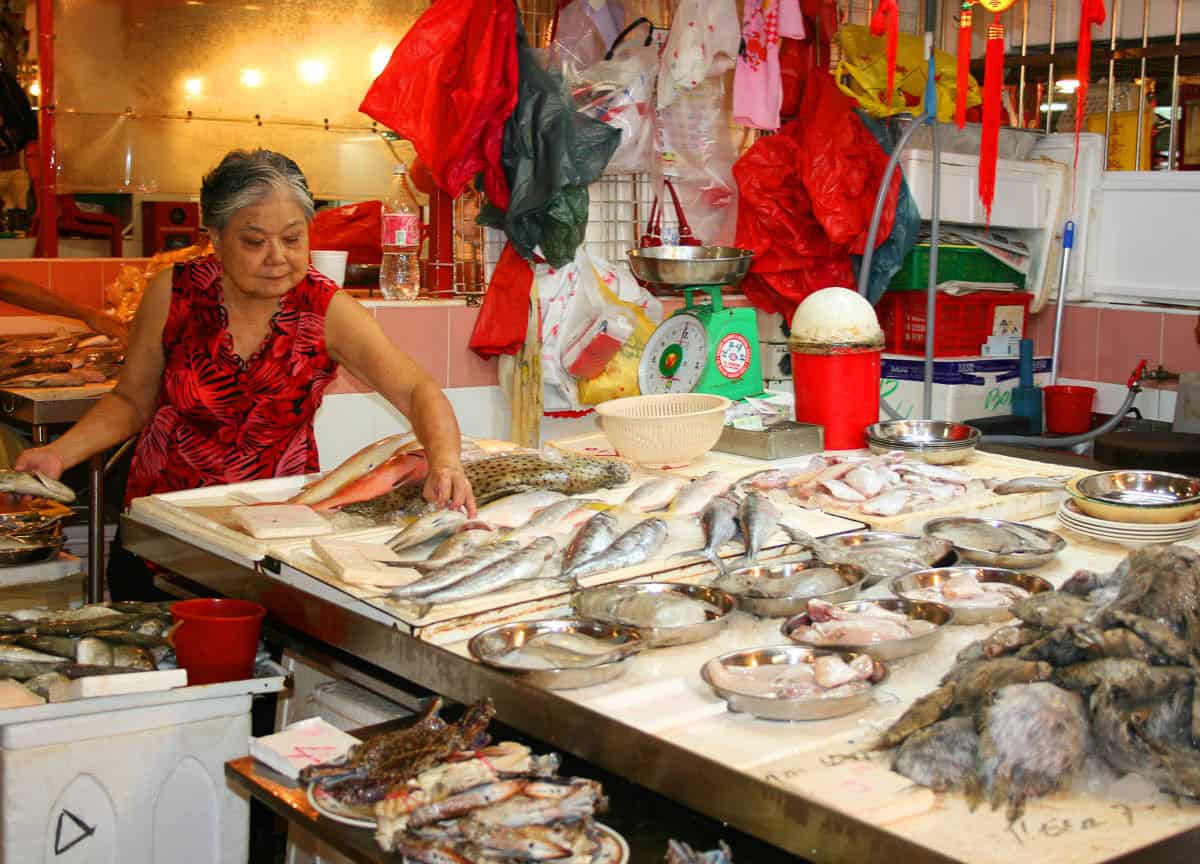
For an authentic shopping experience away from the organised calm of Singapore’s air-conditioned malls, head down to a local wet market to take in the sights, sounds and aromas of everyday Singapore.
These bustling markets are easy to overlook. Singaporeans’ love of convenience and supermarkets means that wet markets are not quite as central to daily life as they once were. But they still offer a fascinating glimpse into a more traditional side of Singapore and provide one of the most authentic experiences you’ll find in the city.
Named because of the melting ice used to keep seafood fresh and the constant washing down of the fish and meat stalls, wet markets are home to hundreds of vendors selling everything from fresh fruit and vegetables to spices, herbs, seafood, meat and flowers.
If you’re new to Asia, they’re also a wonderful place to become acquainted with unfamiliar fruits, vegetables and seafood. You may even come across stalls grinding fresh spices, grating coconuts or preparing curry pastes to order.
Whether you visit to shop, enjoy breakfast at the attached hawker centre or simply soak up the atmosphere, you’ll quickly discover that Singapore’s wet markets are colourful, lively and full of character.
What is a Wet Market?
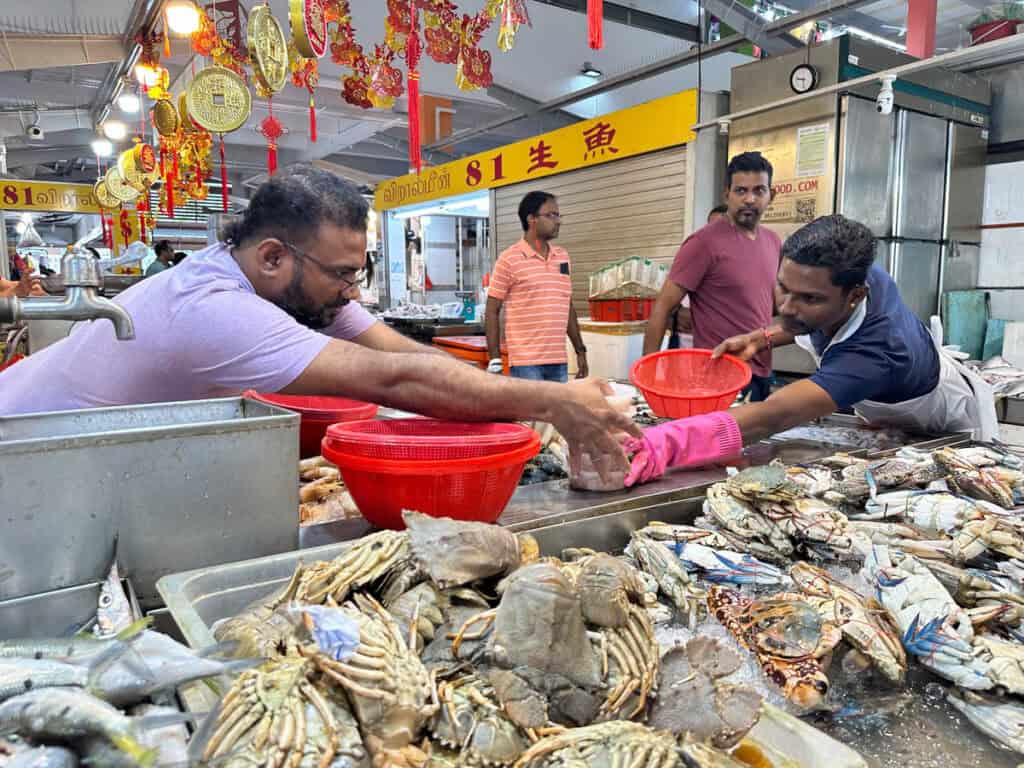
Wet markets are traditional markets selling fresh produce, seafood, meat and other household essentials. They’re found throughout Singapore and are typically located beneath or alongside hawker centres.
The name “wet market” comes from the wet floors created by melting ice and the regular washing down of stalls, particularly those selling fish and meat.
While supermarkets have become increasingly popular in Singapore, wet markets remain an important part of local life. Many residents still prefer them for their fresh produce, personal service and sense of community.
Even if you have no intention of buying anything, a visit to a wet market offers a fascinating insight into everyday Singapore and a side of the city that many visitors never get to experience.
Why Visit a Wet Market?
Singapore’s wet markets may not feature on every itinerary, but we think they’re well worth seeking out.
Here are a few reasons why we love them:
- They offer a glimpse into everyday life in Singapore.
- You’ll discover fruits, vegetables and ingredients you may never have seen before.
- They’re colourful, lively and full of atmosphere.
- Many have excellent hawker centres attached.
- They provide a chance to experience a slice of old Singapore.
- They’re fantastic places for food lovers and photographers.
- They make a refreshing change from shopping malls and tourist attractions.
A Morning at a Singapore Wet Market
Arrive early and you’ll discover a completely different side of Singapore.
As the sun rises, aunties wheel shopping trolleys between the stalls while regular customers stop to chat with their favourite vendors. Fishmongers expertly prepare the morning’s catch, butchers chop fresh meat to order and stallholders carefully arrange displays of tropical fruit and vegetables.
Meanwhile, the smell of kopi, congee and spices drifts down from the hawker centre above, where early risers are already queueing for breakfast.
The atmosphere is lively, noisy and full of energy. Conversations take place in a mix of English, Mandarin, Malay and Tamil, while shoppers bargain, gossip and catch up on the latest news.
It’s one of those experiences that feels a million miles away from Singapore’s gleaming shopping malls and futuristic skyline, and one that offers a glimpse into the city’s past and present.
The Best Wet Markets in Singapore
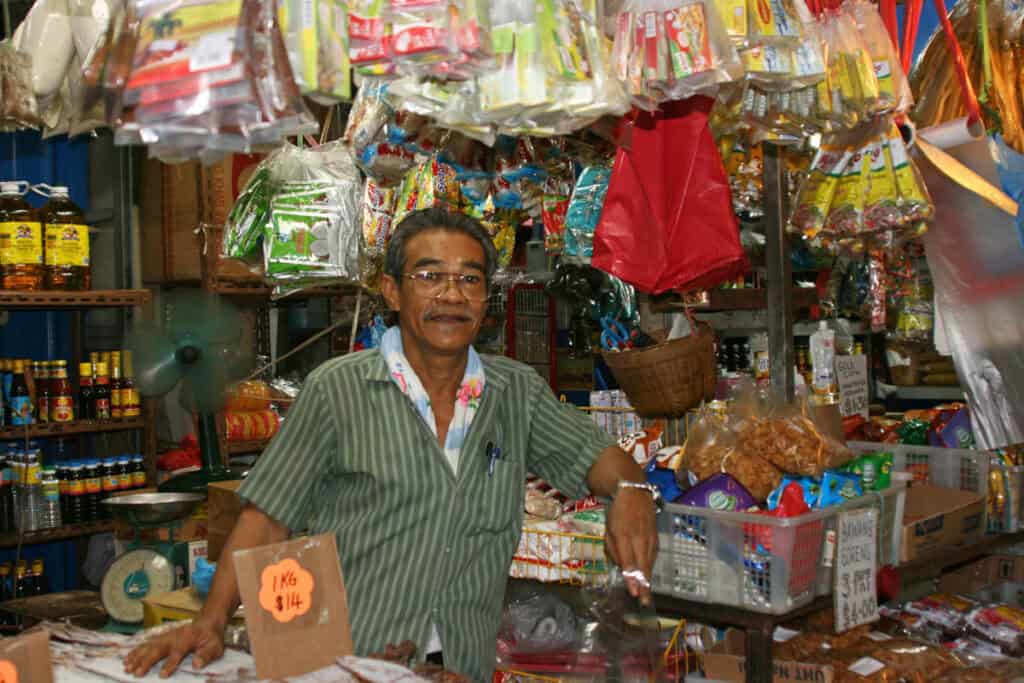
Singapore has dozens of wet markets, but if you’re visiting for the first time, we recommend starting with these five. They’re all easy to reach, close to popular tourist areas and offer a fascinating glimpse into everyday life in Singapore.
Tekka Market (Little India)
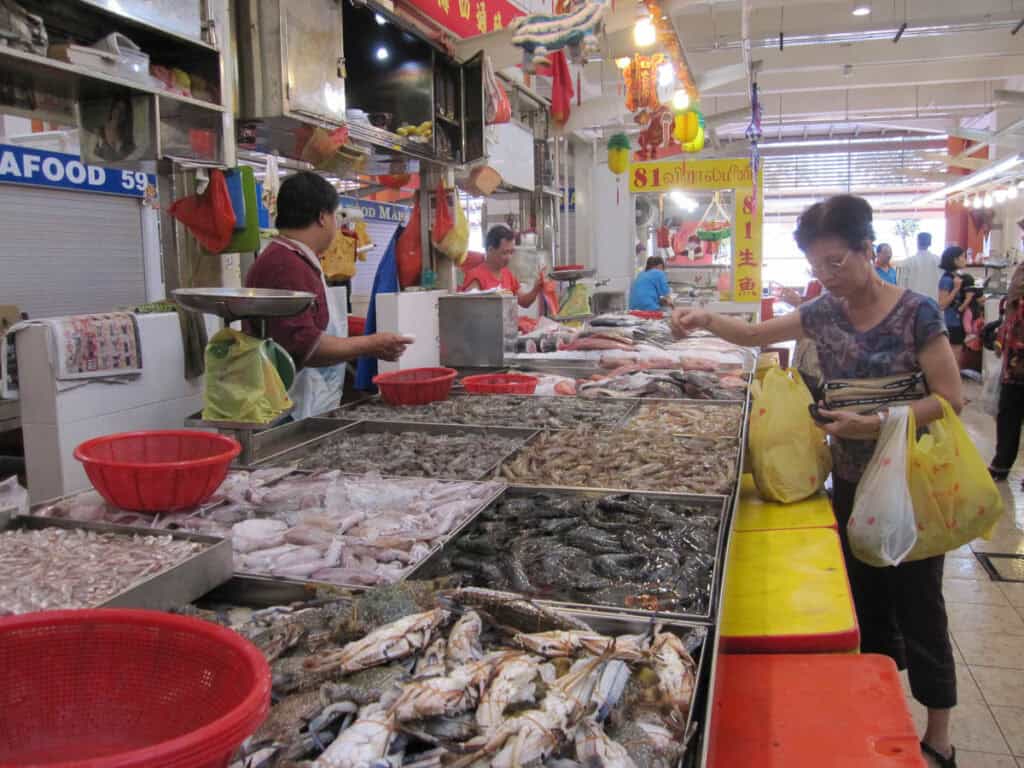
If you only visit one wet market in Singapore, make it Tekka Market.
Located in the heart of Little India, this bustling market is one of the largest and most vibrant in the city. It’s famous for its incredible selection of Indian spices, herbs, vegetables and fresh seafood and meat, while the colourful produce and lively atmosphere make it a favourite with photographers.
You’ll also find one of Singapore’s best hawker centres, making this an excellent place to stop for breakfast or lunch. Breakfast is one of the busiest times of day here, with everyone heading here for their Indian-style local breakfast.
Read more and find our favourite food stalls at the Tekka Centre in our Best Hawker Centres in Singapore article.
Afterwards, spend some time exploring Little India. Our Insider Guide to Little India highlights some of the neighbourhood’s top attractions.
Nearest MRT Station: Little India
Tiong Bahru Market
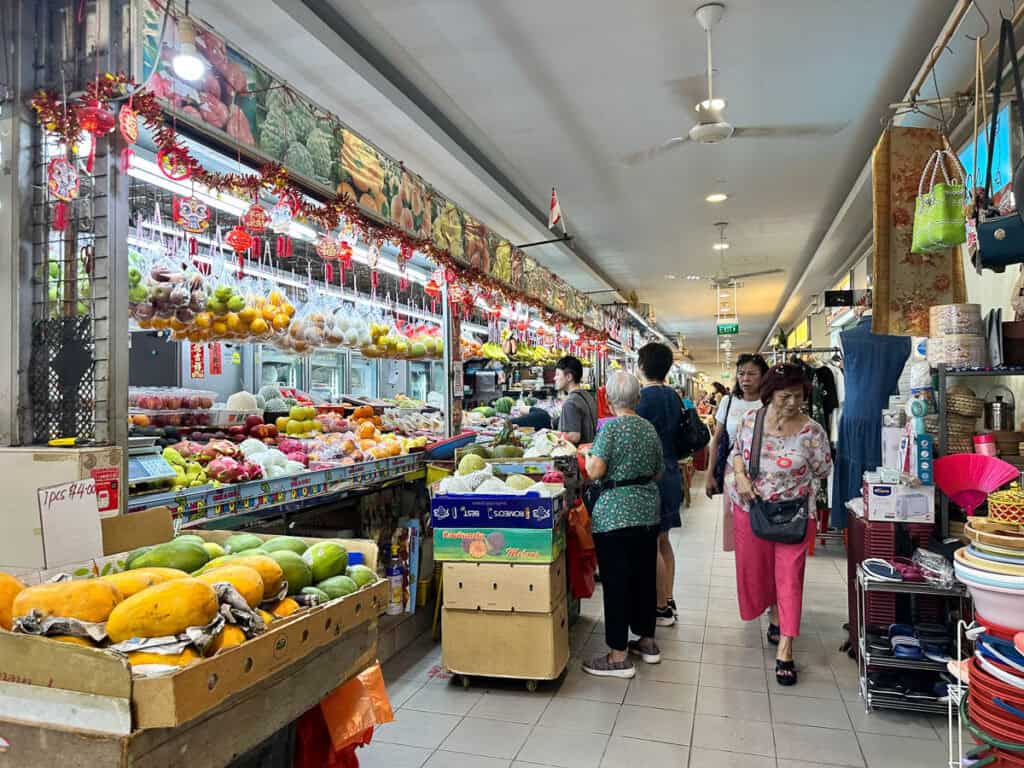
One of our favourite wet markets in Singapore, Tiong Bahru Market combines a traditional market downstairs with a superb hawker centre upstairs.
Compared with some of Singapore’s older wet markets, Tiong Bahru Market feels bright, spacious and particularly welcoming to first-time visitors. Early mornings are especially lively, with locals shopping for fresh produce before sitting down for breakfast upstairs.
Be sure to try the famous chwee kueh from Jian Bo Shui Kueh (one of Singapore’s famous traditional breakfasts) or grab a kopi and simply soak up the atmosphere.
Once you’ve finished exploring, take some time to wander around one of Singapore’s most charming neighbourhoods. Our Insider Guide to Tiong Bahru covers the area’s cafes, shops and attractions.
Nearest MRT Station: Havelock or Tiong Bahru
Chinatown Complex Market
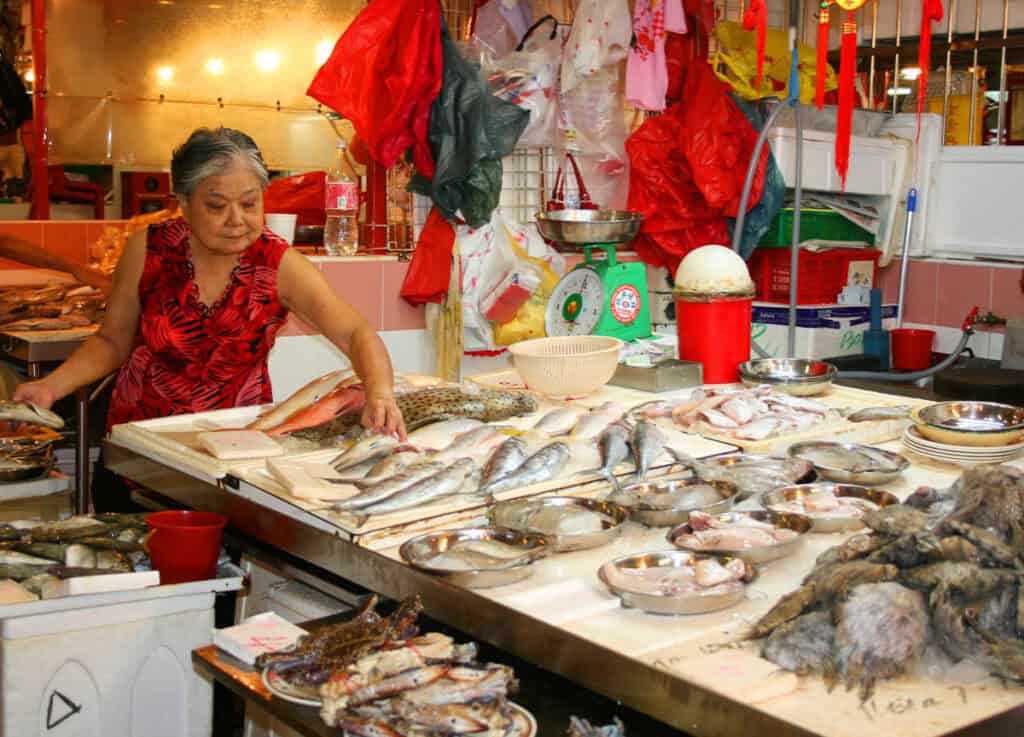
Chinatown Complex is home to Singapore’s largest hawker centre, but many visitors don’t realise that a traditional wet market occupies the basement.
This is one of the best places to experience a slice of old Singapore. You’ll find stalls selling seafood, fresh produce, herbs and dried goods, while upstairs you’ll discover hundreds of hawker stalls, including several Michelin-recognised favourites.
If you’re spending time in the area, our Insider Guide to Chinatown and our guide to the best hawker centres in Singapore are well worth a read.
Nearest MRT Station: Chinatown or Maxwell
Geylang Serai Market
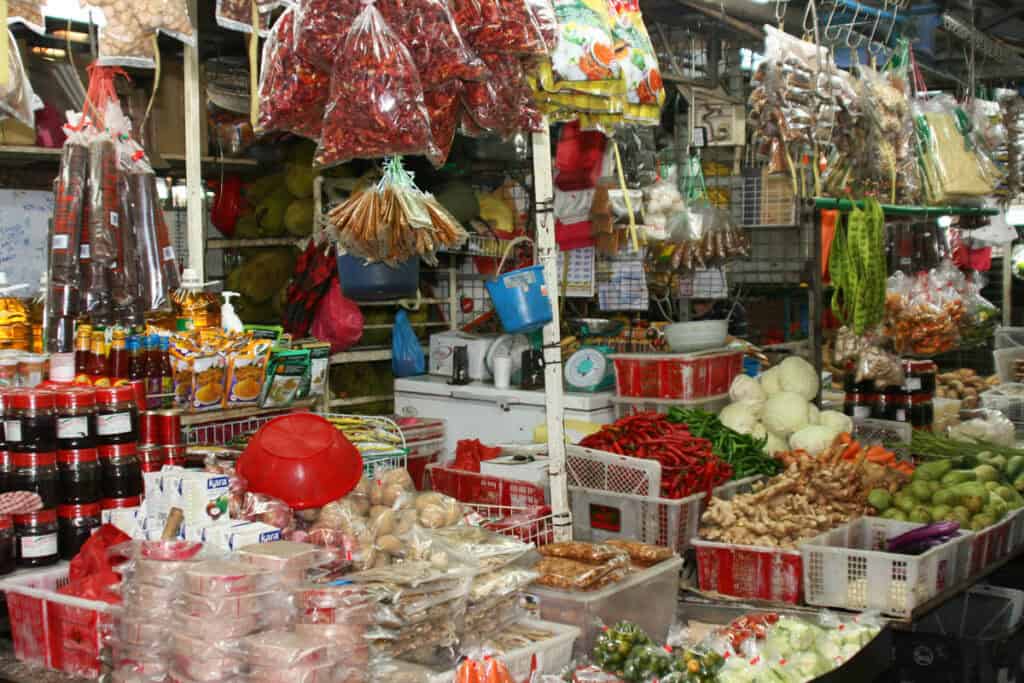
Located close to Katong and Joo Chiat, Geylang Serai Market offers a distinctly Malay flavour and atmosphere.
The striking building is one of Singapore’s most recognisable markets, and inside you’ll find stalls selling fresh produce, spices, halal meats and traditional Malay ingredients. The adjoining food centre is also one of the best places in Singapore to sample Malay dishes.
This market feels a little less touristy than some of the others and offers a wonderful insight into Singapore’s Malay heritage.
If you’re exploring the east coast, our Insider Guide to Katong & Joo Chiat has plenty of suggestions for things to see and do nearby.
Nearest MRT Station: Paya Lebar or Eunos
Albert Centre Market
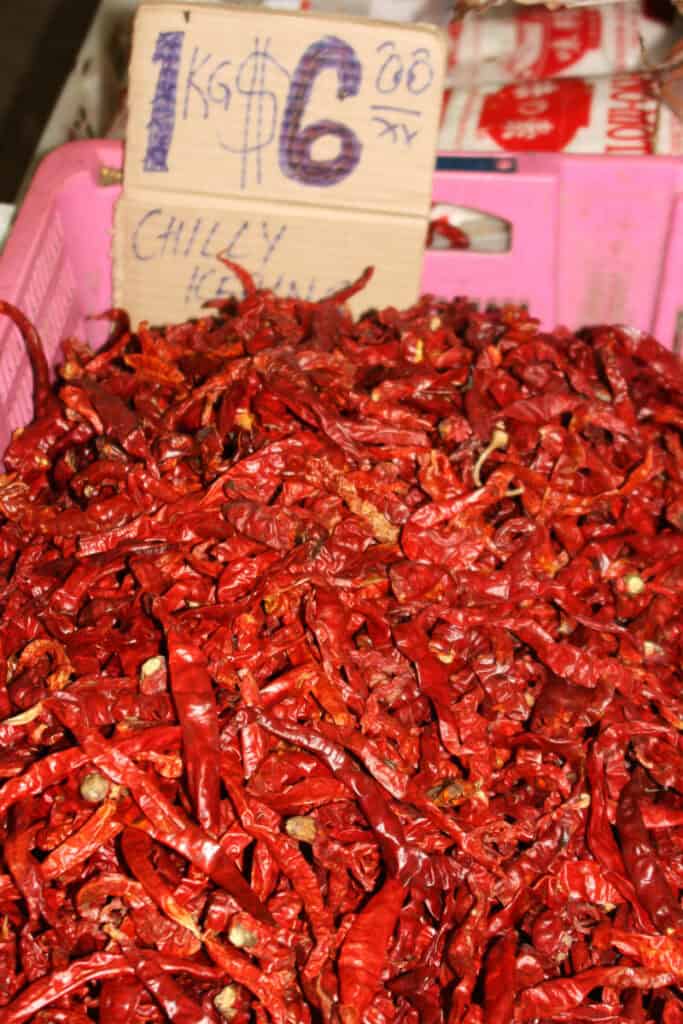
Conveniently located near Bugis, Albert Centre Market is another easy wet market for visitors to include in their itinerary.
While smaller than Tekka or Chinatown Complex, it has a wonderfully local feel and an excellent food centre attached. It’s a great place to take a break while exploring Bugis Market and the nearby attractions in Kampong Gelam.
The market offers a little bit of everything, from fresh seafood and vegetables to flowers and dried goods, making it a good introduction to Singapore’s wet market culture.
Nearest MRT Station: Bugis
Our Favourite?
If we had to choose just one, we’d probably recommend Tekka Market for its incredible atmosphere and variety.
That said, Tiong Bahru Market is perhaps the easiest introduction to Singapore’s wet market culture, while Chinatown Complex offers the best combination of wet market and hawker centre.
What You’ll Find at a Singapore Wet Market
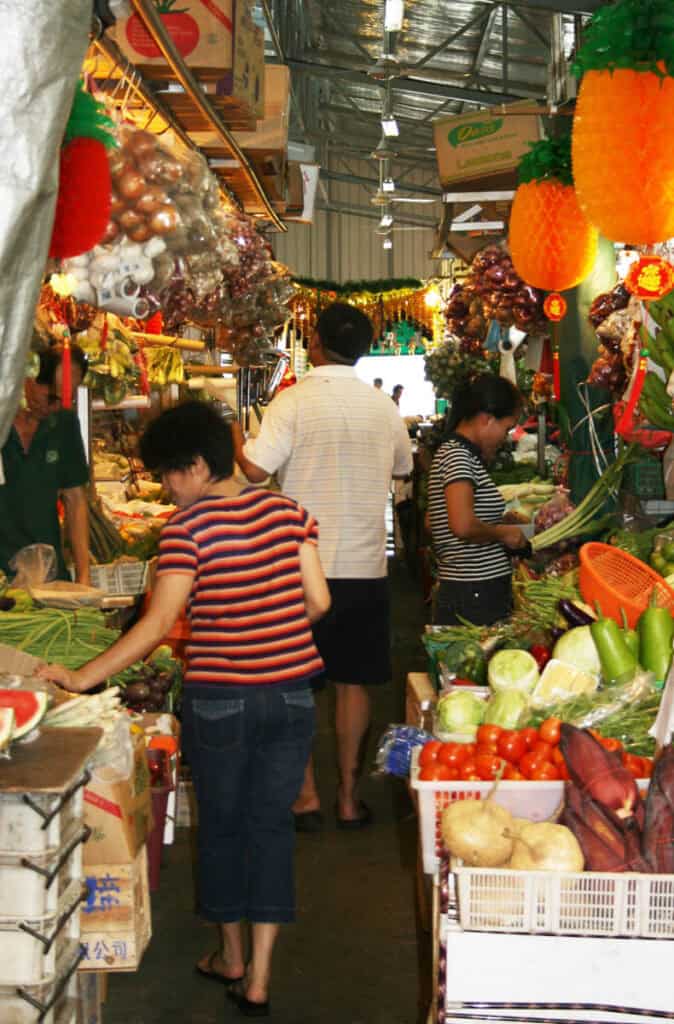
One of the joys of visiting a Singapore wet market is discovering ingredients and produce you may never have seen before.
As you wander through the aisles, you’ll find everything from freshly caught seafood and exotic tropical fruits to fragrant herbs and spices. Even if you don’t plan on buying anything, browsing the stalls is an experience in itself.
Here are some of the things you can expect to find:
Seafood
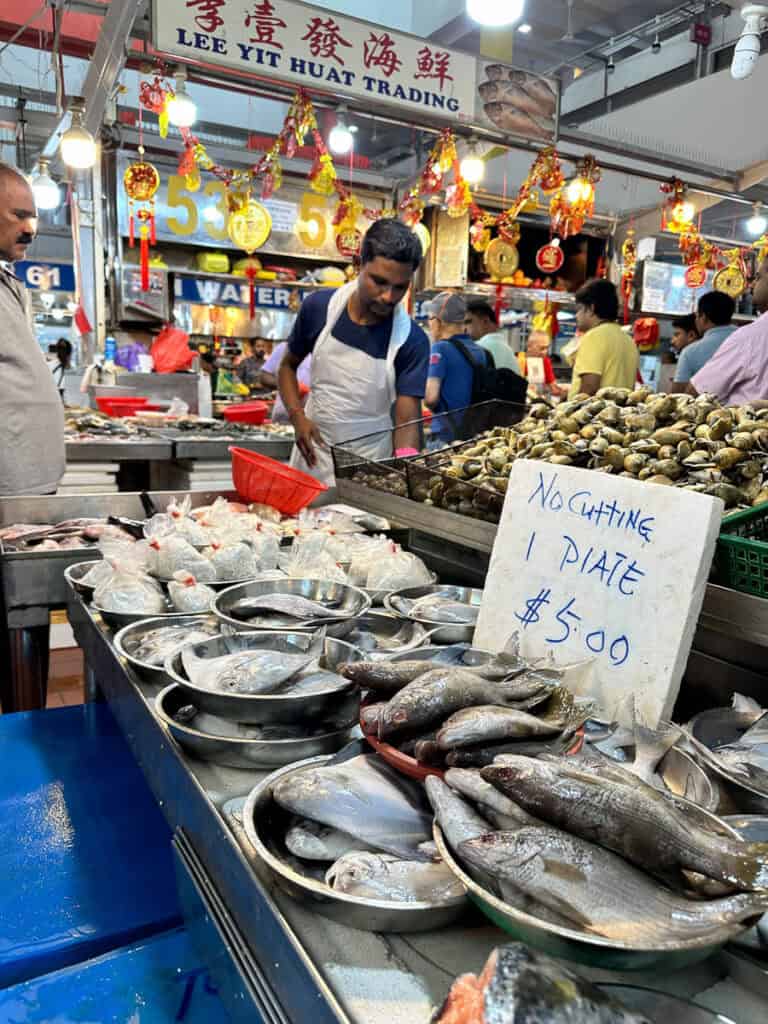
Fish and seafood stalls are often the heart of a wet market. Depending on the day, you’ll see everything from prawns and crabs to squid, shellfish and whole fish laid out on beds of ice.
Don’t be surprised to see stallholders expertly cleaning and preparing seafood to order.
Fresh Meat and Poultry
Butchers prepare meat fresh throughout the morning, with pork, chicken and beef among the most common offerings.
You’ll often notice regular customers chatting with their favourite vendors, some of whom have been serving the same families for decades.
If you’re used to neatly packaged meat in air-conditioned supermarkets, this part of the market may take a little getting used to.
Wet markets are working markets, and seeing butchers chopping meat to order and poultry prepared fresh is all part of the experience.
Tropical Fruits
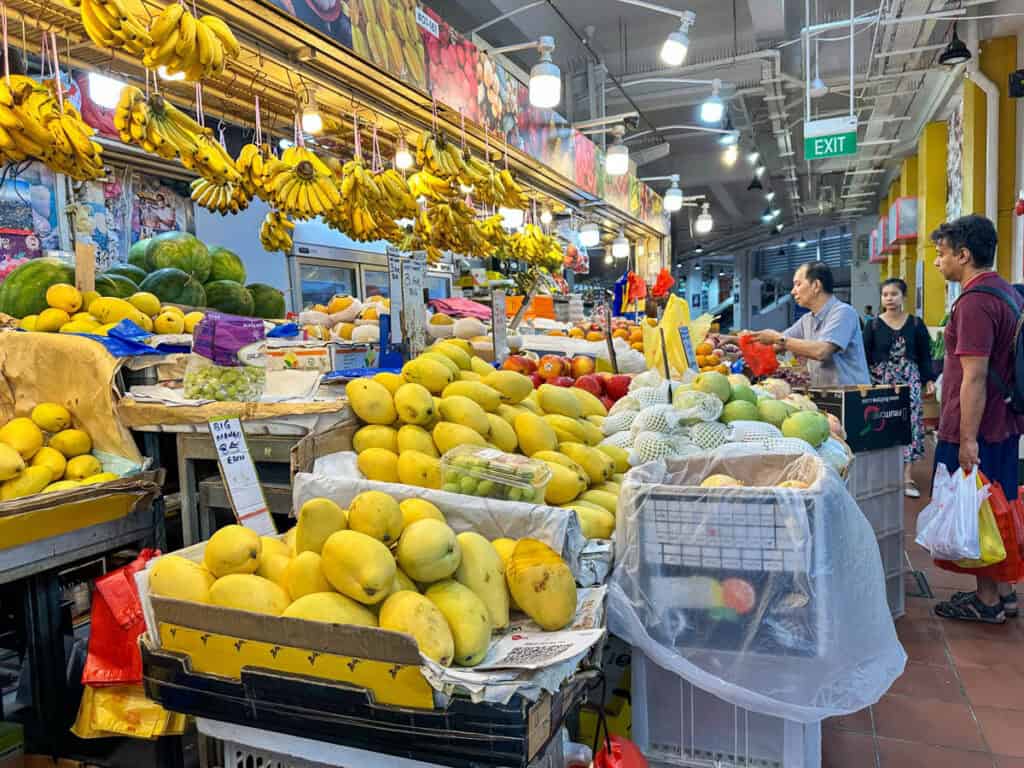
Singapore’s wet markets are fantastic places to discover tropical fruits.
Keep an eye out for:
- Durian
- Rambutan
- Mangosteen
- Jackfruit
- Dragon fruit
- Longan
- Pomelo
- Snake fruit
- Rose apples
If you’re curious about Singapore’s most divisive fruit, our Beginner’s Guide to Durian explains everything you need to know before taking your first bite.
Herbs, Spices and Fresh Ingredients
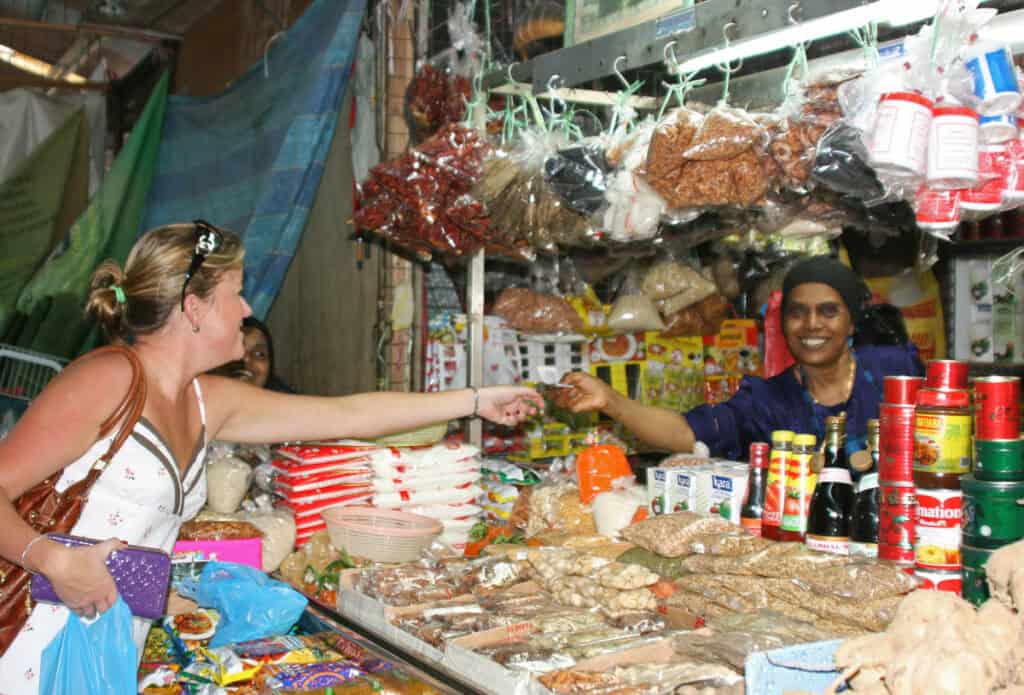
From fiery chillies and fragrant pandan leaves to lemongrass, galangal and curry leaves, wet markets are a treasure trove for food lovers.
You may even come across stalls grinding fresh spices, preparing curry pastes or grating coconuts to order.
Tofu, Noodles and Dried Goods
Many markets also have specialist stalls selling fresh tofu, handmade noodles, eggs, dried seafood, sauces and preserved ingredients that are staples in local kitchens.
Flowers and Household Items
Alongside the food stalls, you’ll often find vendors selling fresh flowers, festive decorations, kitchenware and everyday household essentials.
It’s all part of what makes wet markets feel like miniature communities rather than simply places to shop.
Don’t Miss the Hawker Centres
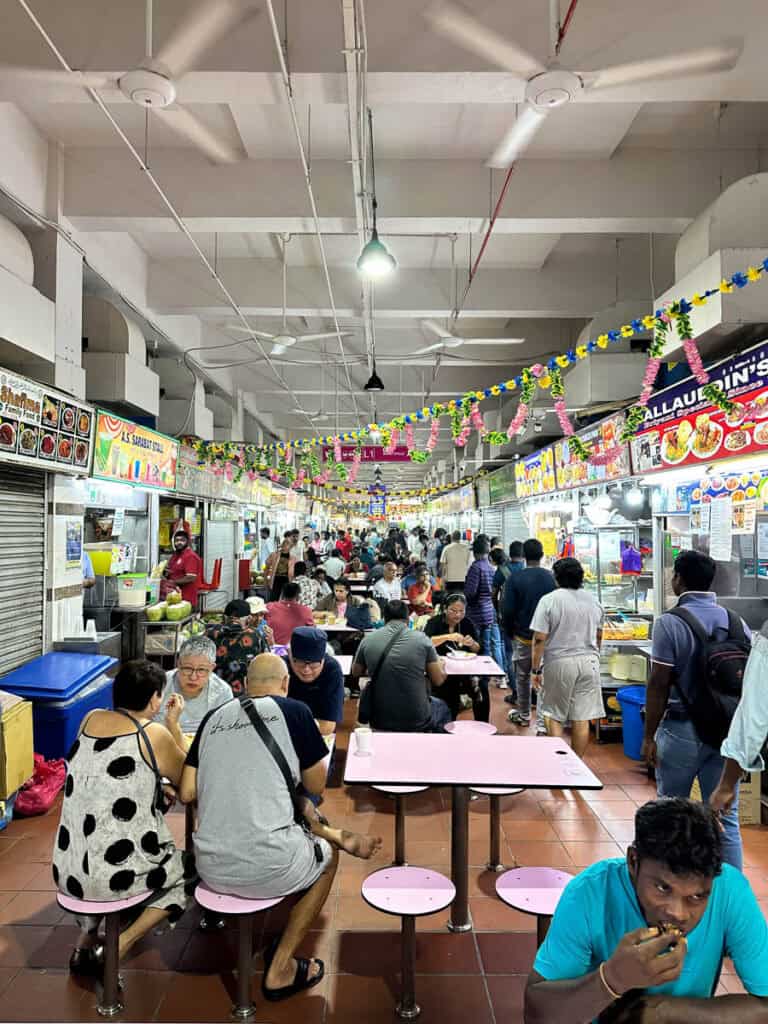
One of the things we love most about Singapore’s wet markets is that many have excellent hawker centres attached.
In fact, one of our favourite ways to spend a morning in Singapore is to wander through a wet market before heading upstairs for breakfast or an early lunch. It’s a wonderful way to experience everyday life and sample some of Singapore’s best food at the same time.
Even if you’re not planning to buy anything at the wet market itself, we highly recommend staying for a meal. Combining a visit to a wet market with breakfast or lunch at the adjoining hawker centre is one of the most authentic experiences you can have in Singapore.
Here are a few combinations we particularly recommend:
Tekka Market
After exploring the market downstairs, head to the hawker centre for a traditional Indian breakfast. You’ll find everything from crispy prata and dosai to biryani and rich, frothy teh tarik.
Our guides to Singapore breakfasts and what to eat in Singapore have plenty more ideas.
Tiong Bahru Market
Tiong Bahru Market is one of our favourite places to start the day. The hawker centre upstairs is famous for Jian Bo Shui Kueh’s chwee kueh, while you’ll also find excellent noodle stalls, kopi and traditional local breakfasts.
Once you’ve finished eating, take some time to explore the charming streets and cafes featured in our Insider Guide to Tiong Bahru.
Chinatown Complex
Home to Singapore’s largest hawker centre, Chinatown Complex is a food lover’s paradise. With more than 200 stalls, you’ll find everything from roast meats and dim sum to Michelin-recognised dishes.
If you’re interested in Singapore’s hawker culture, don’t miss our guides to the best hawker centres in Singapore.
Geylang Serai Market
The adjoining food centre is one of the best places in Singapore to sample Malay cuisine. Keep an eye out for favourites such as nasi padang, mee rebus and satay.
Afterwards, continue your exploration with our Insider Guide to Katong & Joo Chiat.
Albert Centre Market
Albert Centre’s food centre is a great place for an affordable meal while exploring Bugis. From local noodle dishes to freshly brewed kopi, it’s the perfect place to recharge before continuing your sightseeing.
Tips for Visiting a Singapore Wet Market
Visiting a wet market is a fascinating experience, but there are a few things worth knowing before you go.
Go Early
Wet markets are at their liveliest in the morning, when locals are doing their shopping and the produce is at its freshest.
Arriving between 7am and 10am will give you the best experience. By lunchtime, many stalls will already be winding down for the day.
Wear Comfortable Shoes
Wet markets are working markets, so don’t expect spotless floors. Seafood stalls are constantly being washed down and melting ice means some areas can be slippery.
As we like to say, don’t wear your best shoes!
Bring Cash
While more vendors are accepting digital payments these days, some smaller stalls are still cash only. Having a few Singapore dollars on hand can make things easier.
Ask Before Taking Photos
The colourful displays of fruit, vegetables and seafood make wet markets fantastic places for photography, but remember that these are places where people are working. Most vendors are friendly, but it’s always polite to ask before taking close-up photos.
Keep an Open Mind
If you’re unfamiliar with Asian markets, some of the sights, sounds and smells may be very different from what you’re used to. That’s all part of the experience.
Approach your visit with curiosity and you’ll discover a side of Singapore that many tourists never see.
Stay for Breakfast or Lunch
One of our biggest tips is not to rush off after you’ve explored the market.
Many of Singapore’s best wet markets have excellent hawker centres attached, making it easy to turn your visit into one of the most memorable meals of your trip.
Are Wet Markets Worth Visiting?
We think so!
While they may not appear on every Singapore itinerary, wet markets offer a fascinating glimpse into everyday life and provide one of the most authentic experiences you’ll find in the city.
Combined with a meal at the adjoining hawker centre, they make for a memorable morning and a chance to experience a side of Singapore that many visitors overlook.